Wednesday, March 26, 2014

For the love of music: Careers in the music business

Music has continuously evolved through the years. It has become a huge part of the entertainment industry, employing various types of performers, technicians, and staff.

For those many people, having a career in the music business can be rewarding both professionally and personally as it offers a great avenue to practice one’s passion and love for music.


Image Source: cs4fn.org


As a guide, here are some of the most popular careers in the music business today:


Musician and singer -- Often performing in places like concert halls and clubs, singers and musicians play instruments or sing for live audiences and in recording studios. With a median pay of $23.50 per hour, potential employmentin this field is relatively harder to find compared with other occupations. If successful though in gaining employment, singers and musicians could earn thousands or millions of dollars depending on their projects, shows, and sales records. In 2013, singers Lady Gaga and Madonna earned over $80 million and $125 million, respectively, out their various records and projects. 


 Image Source: namepr.co.uk


Music producer -- Having an in-depth knowledge of the music industry, music producers are in charge of the entire music recording process, including the recording, mixing, editing, and mastering an album. They also help mentor artists for tours, songs, style, and musical direction. Music producers earn an average salary of $86,000 to over $100,000, depending on one’s expertise and market demand.

Manager -- Responsible for the direction of an artist’s career, personal managers book their “talents” for gigs and projects, and are involved in the artist’s overall creative decision-making process. They earn by getting a percentage of the performer’s pay.

Recording engineer -- They are heavily involved in the music recording process, including facilitating and working on the sound inside the studio.


Image Source: sxc.hu

An accomplished musician, Mark Begelman is the co-founder of Markee Music, a world-class facility for musicians and bands that need a place to play, rehearse, and record music. Visit this website to learn more of the company.

Saturday, February 8, 2014

REPOST: Music Goes Solo

How does music transformed our culture completely? Read this Forbes.com article.

The culture in which we live today is so vastly different from anything known to our ancestors that it is hard to single out any factor as the critical one. The speed of communication, the rapid advance from one distraction to the next, the packaging of everything into digital format, and the instant projection of our entertainments into cyberspace, to be downloaded in an igloo on the ice-caps or a grass hut in Zululand: all these things have changed things utterly. It is all but impossible for us to look on art, music, literature, theatre and the rest as they were viewed in the past, when they were special events that required an effort of participation and sometimes were anticipated for weeks on end.

Still, at the risk of being unduly selective, I am inclined to the view that it is the change in our ways of enjoying music that has transformed our culture most completely. Music has always had a complex application to human life. You sing it, play it and dance to it. You make music together, sing in choirs, use music to praise God and to serenade your loved one. Music is an accompaniment to marching, fighting and working, and some of the most affecting music we know arose from slavery, as the Negroes on the plantations burst into spontaneous harmony of a kind that was eventually to change the world.

English: The Northwestern High School Gospel Choir
Image Source: forbes.com


Still, in all those uses, music was something that people came together to perform, and came together to appreciate. It was a social event, uniting those present through their own body rhythms and their own sense of moving together in another space – the space created by melody and harmony. Playing and listening were the two experiences on which the whole enterprise depended, and in both of those experiences you were transported, out of this world of resistant obstacles, into a place of freedom.


English: Birthday party honoring Maurice Ravel...
Image Source: forbes.com


Of course there were different tastes in music, and people often fought over them. The rise of jazz out of the Negro spirituals and the dance-hall music of the late 19th century changed the nature of popular music in a far-reaching and quite extraordinary way, introducing new scales, new harmonies and new ways of linking things together. A lot of serious critics were quite snobbish about it, and the German philosopher Theodor Adorno, escaping from Nazi Germany to exile in Hollywood, could not contain his wrath. Adorno told his readers that this new music signified the end of the old musical culture. No longer would music be listened to, as an expression of the highest values and the freedom of the human spirit. Instead it would be reduced to a ‘fetish’, something without life of its own, used to plug the hole made by leisure in the life of the working class. Jazz was part of the new ‘mass culture’ manufactured by Hollywood and the entertainment industry, and its purpose was to subdue the masses, and induce in them the illusion that they were enjoying things, when in fact – in fact what? Adorno never went so far as to say that they weren’t enjoying things. But he did rather imply that their enjoyments were of a lower order than his, and therefore not worth having.


Weimar in California
Image Source: forbes.com


That was tough stuff, but with a remarkable survival value. Despite pouring scorn on America and all its works, Adorno is more widely read in American music departments than any other writer on the philosophy of music. Part of the explanation for this is that Adorno was a Marxist, who saw musical education as part of the worldwide struggle against the capitalist machine. American universities also tend to think of themselves as part of the worldwide struggle against the capitalist machine, and like Adorno, they tend to put out of mind the fact that they depend on that machine for their funding.


opening bars rhapsody in blue - gershwin
Image Source: forbes.com


English: George Gershwin (1898 – 1937), an Ame...
Image Source: forbes.com


Still, it was not Jazz that brought about the real changes. Many classical composers recognized that the rhythmic, melodic and harmonic devices of Jazz could be incorporated into the concert-hall repertoire, with stunning effects, as in Ravel’s Piano Concerto or the immortal Rhapsody in Blue by George Gershwin. And jazz was nothing if not an idiom for playing and listening to. Jazz concerts, big bands, jazz clubs and spontaneous gigs in private houses – all these were extensions of the old musical culture. True they gave a large space to improvisation and the huge, meditative and contrapuntal structures of the classical tradition found no real equivalent in this more light-hearted world. But so what? It was the world in which people now were living, and they had found the idiom with which to celebrate it, and to express its heartaches as well as its joys.


People at London Tower - (Day 9 Holiday 2011)
Image Source: forbes.com


The big change, it seems to me, came when music began to be packaged for home consumption – home consumption, without home production. The gramophone and the radio did some of this work. But it was completed by the iPod, and the habit, which children now acquire from the earliest age, of walking around with their music in their ears, regardless of what else they are doing. Music is no long something you stop to listen to, so as to pass, with whatever degree of wonder, from the world of ordinary causality into this sphere of freedom. Still less is it something that you take time off to play, or to make with your friends. It has been brought down to earth, so as to flow around everyday things, like rainwater on the pavement, demanding no effort either to make it or to hear it, as much a part of the background as the weather or the sound of traffic.

Some of the consequences of this are often remarked on: the fact that children are no longer motivated to learn musical instruments or to sing, whether alone or in choirs; the fact the musical tastes remain static, insulated from judgment, since the iPod only presents you with the things that you like; the fact that children only half attend to the things they are doing, just as they only half attend to the things that are sounding in their ear. But that last point is perhaps the most important. Thanks to the packaging of music we are entering a new world of half attention, a world where everything is done, read, understood, engaged with by half, the other half being the musical tapestry on which the thing of the moment is pinned.

Should we worry about this? And if so, is there anything we can do about it? One major difficulty in confronting the phenomenon is that – precisely because people are plugged into their music from morn to night – it is no longer possible to separate people from their music. We cannot invite them to stand back from their music in a posture of critical judgment. It has become absurd, even offensive, to judge the stuff that people listen to, and as a result, even in departments of academic musicology, the rule is to leave well alone. Let them get on with it. We each sink into the bed of our own chosen music, and this art which was once the highest point of human sharing is no longer shared.

Mark Begelman is the owner of Markee, a fully equipped musical facility in Florida. Subscribe to this Facebook page to know more about him.
Friday, January 10, 2014

Early musical training helps in language development

Image Source: eduguide.org

Learning music at a very early age not only helps children acquire musical skills, but also promotes their cognition and motor development.

While not all children may exhibit prodigious potential, the skills from musical training enable them to learn other subject matter seamlessly. Language development, for example, is an area that benefits. There have been recent studies that directly show how the left side of the brain, known for processing language, is set to work through musical training. The brain becomes “wired” to recognize and understand the patterns in music and speech.


Image Source: discovermagazine.com

According to the Children’s Music Workshop, young minds retain and absorb new information by linking it to songs.

The emerging relationship between music and language development has been inspiring, at the very least, and extends to other areas of growth, such as the cultivation of social skills. Dr. Kyle Pruett, clinical professor of child psychiatry at Yale School of Medicine and himself a musician, stated that language development over time tends “to enhance parts of the brain that help process music. Language competence is at the root of social competence. Musical experience strengthens the capacity to be verbally competent.”


Image Source: thetutorpages.com

So, whether it’s in singing, playing the piano or banging the drum, children must be set off on that musical path.

Mark Begelman
is the co-owner of Markee, a fully-equipped recording and rehearsal studio based in Florida. Follow this Google + account to get more information about its facilities and the company’s advocacies.

Thursday, December 12, 2013

Nurturing young talent

It is often a great thing to meet other people who share the same interests. Being among the likeminded gives the feeling of belonging to something greater than oneself – a sense of community or familiarity that produces empathy and the drive to give other people better experiences in life. This is perhaps the motivation of artists who have developed mastery to nurture those who just started their own journey in their craft.


Image Source: sciencedaily.com

However, talented individuals who know their craft wholly don’t always find it easy to teach others. It takes some time before teachers see improvements among their students’ skills. Those who are grappling with instruction may find these few reminders useful in nurturing young talents:

First, one must remember what one went through before being exceptional at their chosen craft. It takes a lot of practice to master the basics of any art. Finding out how one can motivate students to take on the drills without fail is the first step to getting them to improve.

Image Source: npr.org

Second, making lessons doable yet challenging is vital to learning. Students do well from being challenged and from being given the opportunity to make mistakes. The right balance is important in keeping them interested and focused on their goal.

Third, taking note of the student’s emotional state also influences the learning pace. The teacher must remain encouraging at all times yet firm in correcting any mistakes. It is also important to send a message that frustration is a normal part of the process. The teacher’s duty is to keep reminding students that their hard work will soon pay off if they stick to what they need to do.


Image Source: babble.com

Finally, making every lesson enjoyable lightens the rough patches in the learning process. It is hard to stick to dull yet important routines, but an experienced teacher should be inventive enough to key in novelties during repetitive practice.

Mark Begelman
seeks to nurture young musical talents by providing them with a great facility where they could practice and play. For more information on Markee’s Florida music facility, visit this Facebook page.

Sunday, November 24, 2013

Study: Childhood music lessons benefit adulthood cognition

Image Source: hiddenlighthouse.wordpress.com

Music relaxes the body, uplifts the spirit, and motivates the inner will.

It should not be surprising to know that music provides these significant benefits. But, more than the ability to soothe, uplift, and motivate, music may actually boost the brain. And when children take up music lessons early on, it may boost brain response well into adult life, reveals a study in the Journal of Neuroscience.

Image Source: npr.org

The scientists evaluated 45 healthy adults with ages ranging from 18 to 31. The results suggest that those who received formal music training as children have stronger brainstem responses to sound than those who never experienced music instruction. There is also an effect on how early musical training stopped. All in all, the results imply that cognitive developments boosted by musical training in childhood are significantly preserved through adulthood.

Furthermore, a short period of music lessons in childhood, say at the age of three years, alters the nervous system that persists in adulthood even after training. However, regular and continuous lessons early in life correlate to a better cognitive function in adulthood.

Image Source: littlewingmn.com

Parents have to realize that beyond the ability to emotionally console or make children happy, playing musical instruments nourishes the mind. Injecting music into children’s lives can go a long way. As the great philosopher Plato put it: “I would teach children music, physics, and philosophy; but most importantly music, for the patterns in music and all the arts are the keys to learning.”

Mark Begelman
and Markee Music open their doors to children to bring music into their lives. Know more of the studio’s facilities and services by visiting this Facebook page.

Saturday, November 23, 2013

Songwriting essentials: Putting the groove on your music


Image Source: blog.thezoen.com


Professional musician songwriters have different ideas on how to write creative music for existing lyrics or the other way around. Some composers write the lyrics first and then compose the music after. Others find it easier to scribble the lyrics only when the notes have been ironed out. No matter how they do it, for experienced composers, creating music is relatively easy.

However, if you are a budding songwriter, writing words for the music or fitting music to those words can be a challenging take … at first. You may have to painstakingly extract those creative juices to make music that will sell, sooner or later. So as a rookie composer, do what many professionals do nowadays: look for inspiration from a variety of sources. It doesn’t matter if it’s in the form of a horrendous experience, a personal nightmare, a happy memory, a website, another song, or a dead dog.


Image Source: songwriting.songstuff.com


Steve Hillier, of Dubstar, has written numerous songwriting guides. You will find more helpful ideas from him in this BBC article.

There is no exact formula for a guaranteed hit song, but one thing’s certain—every song has its own life and origin to tell. Each arose from a unique process from scratch. As how the singer-songwriter, film score composer, and record producer Mark Knopfler puts it:


Image Source: garyewer.wordpress.com


“Each song has its own secret that's different from another song, and each has its own life. Sometimes it has to be teased out, whereas other times it might come fast. There are no laws about songwriting or producing. It depends on what you're doing, not just who you're doing.”


Mark Begelman is co-founder of Markee Music, which offers facilities and services for your songwriting needs. For more advice about songwriting and making music, visit this website.

Saturday, November 2, 2013

Markee: The Mark Begelman-Keith Ridenour partnership

Image Source: markeemusic.com/about-markee


Music has always captured the hearts of these two entrepreneurs—Mark Begelman and Keith Ridenour—both of whom have the goal of providing a state-of-the-art space complete with rehearsal and recording facilities and gears to musicians and bands. Together, they established Markee, a music studio located in Deerfield Beach, Florida.

Both of them have a strong grasp of what the business of music is all about and how musicians struggle to get their music out there. The two are musicians themselves.

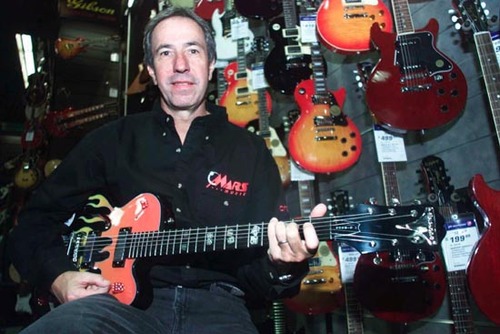
Mark Begelman has been playing music for 40 years in his band ‘Monkey at a Typewriter’. He is also the founder of Mars Music.


Image Source: twitter.com/MarkBegelman


Keith Ridenour, on the other hand, is an accomplished song writer who founded and managed Ridenour Studios until its sale in 2003.

Markee is a one-stop music venue providing the following services and facilities, among others: six rehearsal studios, recording studio, music lessons rooms, equipment rentals, and song writing workshops … All for the convenience of both newbie and professional musicians.

“This is as good as it gets. Mark and Keith are always on top of it. This is truly the place to rehearse. Clean state of the art rooms and top of the line equipment. They are never hesitant to help with whatever you need,” Nash C., a satisfied client, shares his experience at Markee.


Image Source: facebook.com


Musicians can visit this website for more information on the different services that Markee offers.